After months of record-high prices, Egypt’s poultry feed market is experiencing a dramatic downturn. A combination of government intervention and easing import barriers has helped prices plummet. However, long-term stability for the feed sector remains uncertain.
After reaching unprecedented heights, poultry feed prices in Egypt have nearly halved over the last several weeks, providing a long-awaited relief for the reeling broiler meat industry, Sameh El-Sayed, head of the poultry division in the Chamber of Commerce in Giza, has recently unveiled.
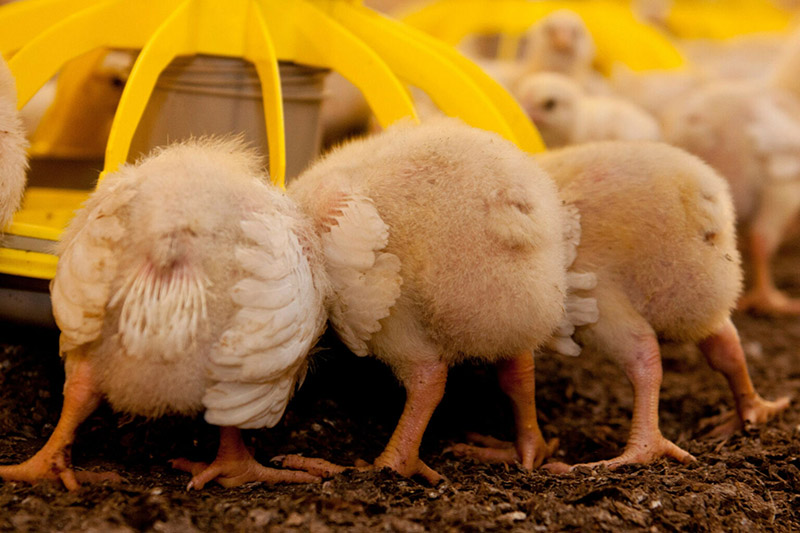
Soaring feed prices, coupled with weak farmgate poultry prices, wreaked havoc on the Egyptian poultry industry over the last several months. Image created with the help of AI (Reve.art)
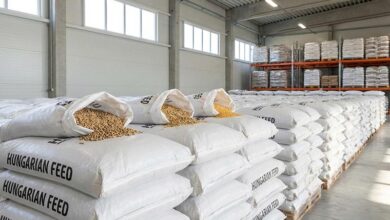
Feed prices have plummeted from EGP40,000 (US$842) per tonne to as low as EGP19,000 (US$399) to EGP22,000 (US$462) per tonne in December 2025, El-Sayed said, praising the help from the state in lowering feed prices.
Key feed inputs, including corn, soybean, and wheat, are entering the Egyptian market without any barriers now, El-Sayed added.
Controversial reform sparked feed challenges
To a significant extent, the difficulties in the Egyptian poultry feed market are attributed to a controversial government reform, under which, in December 2024, Future of Egypt, a state agency, was appointed as the country’s new state grain buyer, replacing the General Authority for Supply Commodities (GASC).
Local observers believe the transition has not gone smoothly, citing disruptions in the import of several key agricultural commodities. Notably, Egypt saw its imports fall by more than 27% in the first half of 2025, totaling 5.2 million tonnes. The government’s share of purchases dropped 57% to 1.5 million tonnes.
Up to 40% of poultry farms were at risk of closure
Soaring feed prices, coupled with weak farmgate poultry prices, wreaked havoc on the Egyptian poultry industry over the last several months. According to Dr Abdel Aziz El-Sayed, head of the Poultry Division at the Federation of Chambers of Commerce, up to 40% of poultry farms in the country were at risk of closure due to financial strain.
The industry faced a critical shortage of poultry feed, forcing quite a few breeders to cull their flocks. The resulting influx of poultry on the market has pushed prices even lower.
Uncertain future for feed sector
However, even with temporary relief, the long-term outlook for the Egyptian feed industry remains vague. Egypt is actively seeking to lower its massive wheat import bill amid foreign currency shortages, leading to increased focus on boosting local production, promoting water-saving farming, and potentially shifting private-sector roles in procurement, all while managing high food subsidy costs.
These efforts have brought modest results so far, and the government is clearly falling short of its declared goals, such as lowering wheat imports by 1 million tonnes per year, which was rolled out in 2024.
Vladislav Vorotnikov
Source: poultryworld 24/12/2025