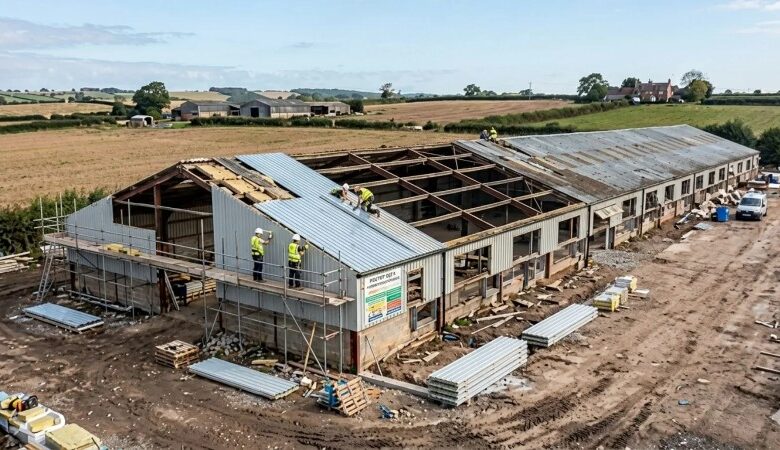
Producers weighing up whether to rebuild ageing livestock sheds or retrofit existing units were urged to focus on practical efficiency gains first during a lively discussion at Pig & Poultry Fair 2026.
The debate, chaired by Holly Shearman, head of the Farm of the Future programmes at the Royal Agricultural Society of England (RASE), brought together representatives from AHDB, NFU Energy and The Lakes Free Range Egg Company to examine how pig and poultry businesses can cut energy costs, reduce emissions and improve overall performance.
Addressing energy waste
Roger Stones of NFU Energy said most pig and poultry sheds are losing money through inefficient energy use and argued that farmers should assess where energy is being wasted before committing to expensive rebuilding projects.
“Most pig and poultry sheds have an energy waste problem,” he told visitors at the event. “Before spending money on rebuilds or retrofits, assess whether and how your buildings are wasting energy.”
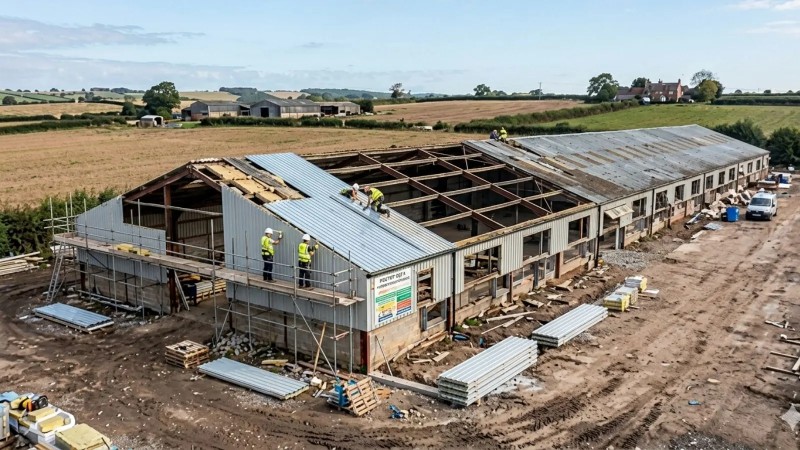
According to Roger Stones of NFU Energy, most pig and poultry sheds are losing money through inefficient energy use. Image created with the help of AI.
He highlighted insulation as one of the quickest wins, explaining that improving poor insulation can reduce heating and cooling costs throughout the year. Air leaks, outdated fans and inefficient pumps were also identified as areas where savings could be made.
Variable-speed drives fitted to fans and pumps can dramatically improve efficiency, delivering potential savings of 20-50%, while heat recovery systems could reduce heating bills by as much as 55% in some units.
Better environmental control
Environmental control inside livestock buildings was another major talking point. Stones said improved monitoring of temperature, humidity and ventilation through sensors and updated control systems can both reduce energy use and support bird and pig performance.
“With accurate monitoring, producers can create more consistent conditions, improve livestock performance and lower running costs at the same time,” he said.
Renewable energy also featured strongly in the discussion. Solar panels on shed roofs, battery storage and anaerobic digestion systems were all highlighted as ways farms can reduce their reliance on increasingly expensive electricity.
Sustainability beyond the shed
While retrofitting may be the right solution for some farms, David Brass of The Lakes Free Range Egg Company reminded delegates that sustainability extends beyond the buildings themselves.
“Sustainability has to work economically, environmentally and ethically,” he said, adding that consumer expectations around welfare are becoming just as important as carbon reduction.
Brass outlined several changes introduced across The Lakes Free Range Egg Company’s network, including dark brooding systems, heat exchangers, evaporative cooling and the planting of trees around poultry ranges. The trees can later be chipped and used as biomass fuel, helping to create a more circular production system.
The company also makes extensive use of sensors and data collection to improve efficiency and bird performance. As a result, its greenhouse gas emissions have fallen below the current UK average for egg production.
When rebuilding becomes necessary
Despite the focus on retrofit solutions, Brass concluded that there are occasions when rebuilding is unavoidable. “If a shed is more than 20 years old and isn’t steel-framed, it needs to be rebuilt,” he said.
Although no single answer emerged from the debate, the session provided producers with practical ideas to improve efficiency, strengthen sustainability credentials and increase profitability in an increasingly cost-conscious sector.
Tony McDougal
Source: foodagribusiness (22/06/2026)