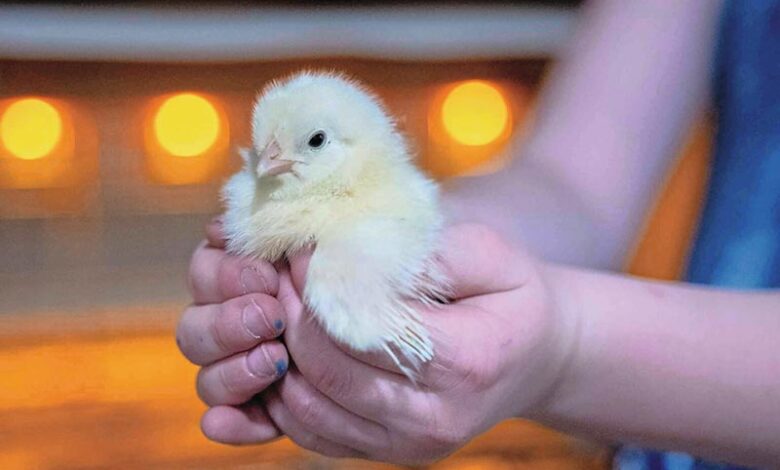
New research from the University of Bristol suggests that gentle human contact can do far more than simply familiarise chicks with stockpeople – it can actively generate positive emotions and improve early-life welfare outcomes.
Although it has long been understood that human presence and handling can shape the behaviours and stress responses of farm animals, the emotional dimension of these interactions has remained less clear. The latest findings, published in the journal Animal Welfare, indicate that chicks not only tolerate gentle handling, but actively seek it out, associating the experience with feelings of safety and comfort.
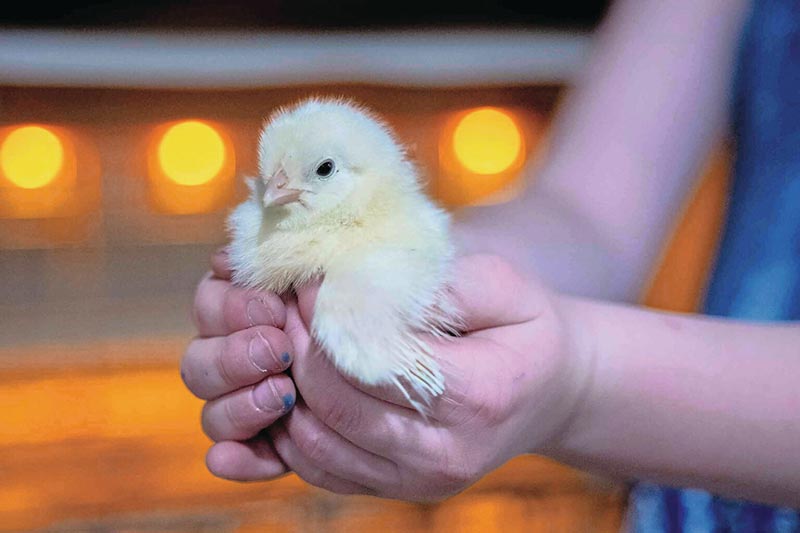
Fear responses in poultry can influence behaviour, productivity and overall welfare throughout life. Photo: Bram Becks Photography
The research team used a “conditioned place preference” test, a method frequently employed in neuroscience to evaluate how animals perceive and remember their experiences. The approach is straightforward: if an animal feels good in a particular environment, it later shows a preference for that space.
Gentle handling versus neutral presence
A total of 20 chicks from a commercial laying strain were trained within a 2‑chamber apparatus, each side visually distinct through different colour cues. After establishing each bird’s initial chamber preference, researchers conducted pairing sessions linking one chamber with gentle human interaction – slow stroking, soft speech and calm handling – and the other with a neutral human presence characterised by stillness and silence.
When the chicks were later tested, the results were clear: they spent significantly longer in the chamber associated with gentle handling. Importantly, they did not avoid the chamber where the neutral handler had been present, suggesting their behaviour was driven by attraction to the positive experience, not avoidance of a negative one.
The potential to improve chick welfare
Dr Ben Lecorps, senior lecturer at Bristol Veterinary School and principal investigator for the study, said the results reveal how simple, calm handling has the potential to shape the human-animal relationship from fear-inducing to positive and consequently improve the chicks’ welfare.
This has important implications for commercial poultry systems, particularly hatcheries and rearing units where early interactions are often brief but formative. Fear responses in poultry can influence behaviour, productivity and overall welfare throughout life. Interventions that reduce stress during early development – especially ones as simple and low-cost as gentle touch – may offer producers practical tools for improving flock outcomes.
A meaningful role in ongoing welfare strategies
Beyond on-farm practice, the study contributes to growing scientific interest in positive welfare – moving beyond the avoidance of harm to actively promoting good experiences. By evidencing that chicks can form positive emotional associations with humans, the Bristol team provides a valuable framework for further investigation into early-life handling protocols and welfare assessment strategies.
As the poultry industry continues to evolve, simple changes in how chicks are handled during their first days could play a meaningful role in supporting healthier, more resilient birds.
Tony McDougal
Source: PW (14-04-2026)